Easy paracord keychain: step-by-step instructions for beginners
Guides for an easy paracord keychain disagree on the basics: 5 minutes or 40, 3.5 ft of cord or 6. The gap comes from the cord you cut, how tightly you pull and whether you have tied the knot before.
Summary generated by AI from this piece. It may contain errors — the full piece is the reference.
Explore other styles:
For an easy paracord keychain, cut about 6 ft of 550 cord, fold it through a split ring and tie cobra knots from alternating sides over about 4 in of center strands until the weave reaches the ring. Plan 20 to 40 minutes the first time. If the weave twists into a spiral, the same side started two knots in a row, so undo to the last flat knot. Trim the ends and seal them with craft glue; melting nylon is an adult job. Clip the keychain to keys, a zipper or a bag, and never wear it around the neck or use it to hold weight.
Cut about 6 ft of 550 paracord for a 4 in keychain, or 8 ft for a longer one.
The cobra weave repeats one knot made of two half knots, started from alternating sides.
Plan 20 to 40 minutes for a first keychain.
A spiral twist means one side started twice: undo to the last flat knot.
Seal the ends with craft glue, leave melting to adults, and never wear the keychain around the neck.
A paracord keychain is a short, woven strip of strong cord on a key ring. You fold the cord through the ring and tie the same knot again and again, switching sides each time. It takes about half an hour the first time. Glue the ends so they stay put, and let an adult do any melting with a lighter.
Cut about 6 ft of paracord, fold it onto a split ring and tie cobra knots from alternating sides until the weave reaches the ring.
Plan for 20 to 40 minutes the first time.
6 ft makes a keychain about 4 in long, and 8 ft makes a longer one.
If the weave twists into a spiral, undo to the last flat knot.
Seal the ends with glue. Melting nylon is a job for an adult.
Clip it to keys or a bag. Do not wear it around the neck or use it to hold weight.
Supplies for an easy paracord keychain
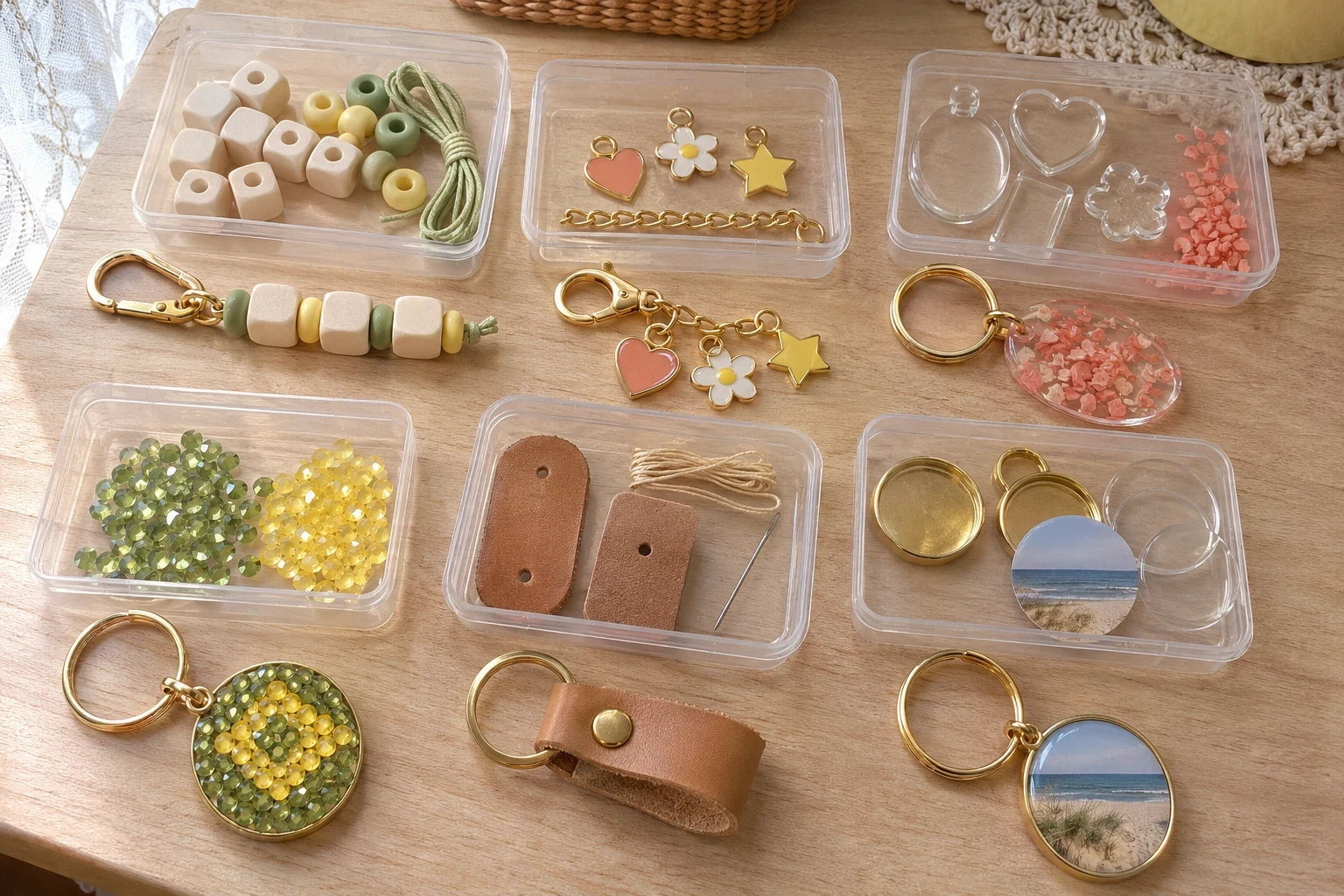
A keychain uses little cord, so mistakes are cheap. To skip sourcing parts, compare options in our DIY keychain kit guide.
Materials list
Paracord: one piece of 550 cord, about 6 ft. Type III 550 cord has 7 inner strands and a 550 lb minimum breaking strength.
A split ring of 25 to 30 mm, or a small clip or swivel clip. Stainless steel resists rust.
Sharp scissors and tape.
Craft glue, or a lighter if an adult will melt the ends.
Paracord length by keychain size
Weaves use far more cord than the finished length suggests: about 30 cm (11.8 in) of working cord per 2.5 cm (1 in) of cobra weave. The table covers a cobra with a separate core and the box weave below.
Finished length
Cobra working cord
Cobra core cord
Box weave, each of 2 cords
8 cm (3.1 in)
1.2 m (3.9 ft)
35 cm
1 m (3.3 ft)
10 cm (3.9 in)
1.5 m (4.9 ft)
40 cm
1.2 m (3.9 ft)
The one-piece method below uses 6 ft for 4 in, or 8 ft for longer. Cut generously.
Easy paracord keychain instructions
These easy paracord keychain instructions use the cobra weave: one knot repeated, left then right.
Step 1: Attach the cord to the ring
Fold the cord in half and push the fold through the split ring. Pull the two tails through the loop and pull them tight.
Step 2: Set the length
Measure about 4 in along the cords from the ring and bend both back toward the ring. Tape the bends to the table with the ring toward you, then tape the ring down. The two cords between the bends and the ring are the center strands.
Step 3: Tie the cobra knot
A cobra knot is two half knots, one from each side.
The two half knots in one cobra knot.
First half knot, from the left
Just below the bends, cross the left tail over the center strands, leaving a loop on the left. Lay the right tail over the left, pass it under the center strands and up through the left loop.
Second half knot, from the right
Do the opposite: cross the right tail over the center, leaving a loop on the right. Lay the left tail over it, pass it under the center and up through the right loop.
Step 4: Keep alternating to the ring
Repeat, switching sides each time, and push each knot up against the last. Every few knots, turn it over: both edges should show even bumps and the center strands should lie side by side. Stop at the ring, leaving it free to move.
This video tutorial shows the knot being tied.
Step 5: Finish the ends
Trim both tails close to the last knot, about 3 mm from the weave, then seal them.
Sealing with glue
Dab a little craft glue on each trimmed end and let it dry fully before clipping the keychain on.
Melting with a lighter
Melting is adult-only. Hold the lighter to each cut end for a second or two, then press it flat into the weave with the side of the lighter or a butter knife. Melted nylon is hot and sticky, so keep it off your fingers.
Easy paracord keychain ideas to try next
Change one thing at a time.
Box weave keychain
The box weave has no core. Thread two cords of about 1 m through the ring to make four strands, then fold them over one another in the same direction, tightening each layer into a square. It makes a firm keychain about 1.5 cm across.
Spiral keychain
Tie every half knot from the same side on purpose and the weave twists into a spiral.
Two-color paracord keychain
Use two cords of different colors. A cobra shows one color per side. A box weave makes a checked pattern when matching colors sit opposite each other.
Cobra weave (left) and box weave (right).
Other knots to learn after the cobra
A fishtail, snake knot and diamond knot are also named as beginner keychains, but no steps are given here. For other cord crafts, see our bag charm DIY guide and DIY phone charm guide.
Fixing common paracord keychain problems
Go back to the last knot that looks right and retie from there. A steady pull works better than a hard one.
Problem
Likely cause
Fix
Twists into a spiral
Same side started twice
Undo to the last flat knot and start from the other side
One edge fatter
That side was pulled harder
Loosen those knots and pull both tails evenly
Ends come loose
Glue or melt did not hold
Add glue and dry fully, or re-melt and press flat
Ran out of cord
Planned too long
Stop early, seal the ends, cut about 20% more next time
Using a paracord lanyard keychain safely
A super easy paracord lanyard keychain is still a keychain: a short loop clipped to keys, a zipper or a bag. Tug the ring firmly and check that the knots and sealed ends hold.
Do not wear it around the neck or use it to hold weight, because cords around the neck can be a strangulation hazard. Some makers unravel one for spare cord.
Keep charms and small rings secure and away from children under 3. The CPSC small parts rule defines a small part as anything that fits entirely inside a cylinder approximating the throat of a child under 3.
A first paracord keychain depends on the cord you cut, the side you start each knot from and how evenly you pull. Get those right and the cobra is a short project. Then try the box weave or a second color, and find more cord crafts on the BagCharms blog.
About 6 ft makes a keychain of 4 in, and 8 ft makes a longer one. With a separate core, 1.2 m of working cord plus a 35 cm core makes 8 cm. Cut extra.
What is the easiest paracord keychain for beginners?
The cobra weave. It repeats one knot from alternating sides and is the same knot used in many paracord bracelets.
How long does it take to make a paracord keychain?
Simple fob versions are described as 5-minute projects. Allow 20 to 40 minutes for a first cobra keychain.
What age can make a paracord keychain?
Kids 8 and up can usually tie the knots with an adult nearby. Melting the ends stays an adult job.
How do you finish a paracord keychain without a lighter?
Seal the trimmed tails with craft glue and let it dry fully. Tucking them under the last two knots and trimming close also works, but is less secure.
Why is my paracord weave twisting?
The same side probably started two knots in a row. Undo back to the last flat knot and start from the other side.
What is the difference between a box weave and a cobra weave?
A cobra is flat and built around a core. A box weave folds four strands over each other with no core, forming a solid square column.
How do you make a paracord keychain with two colors?
On a cobra, use a different color for each working end. On a box weave, place matching colors opposite each other for a checked pattern.
Can you wear a paracord lanyard keychain around your neck?
No. Cords around the neck can be a strangulation hazard, so keep the keychain clipped to keys, a zipper or a bag.
Jonah ElleryArchive editor, BagCharms
Catalogues charms by hand, with the heat and the appreciations behind each one, and links every record to its official house. Nothing here is for sale.
This piece is part of a non-commercial hobby archive. Brand names, images and trademarks belong to their respective owners and are shown for identification and reference only.